
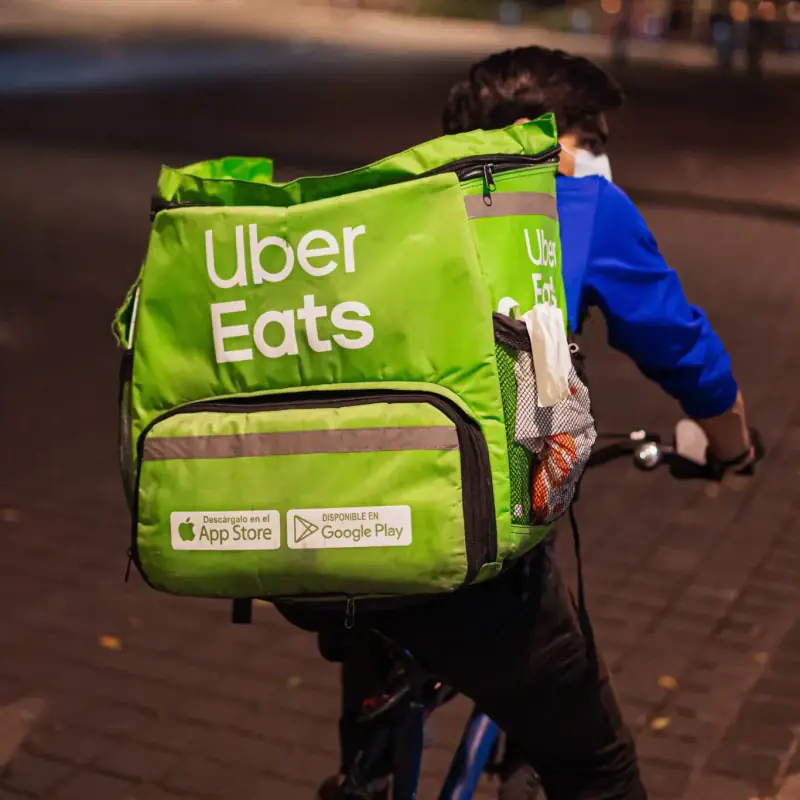
On 12 June 2026, the International Labour Conference adopted ILO Convention No. 193 on Decent Work in the Platform Economy. It is the first binding global treaty covering platform work, and it sets standards on pay, algorithmic management, worker classification, and access to labour protections. This is a significant milestone for workers globally, but highlights the gaps and risks that currently exist.
Globally the platform economy is growing rapidly – third-party logistics, last-mile delivery, cleaning, security and care work are all sectors that now lean heavily on the platform economy, which has become embedded across varied value chains and business models. But so too is the evidence of exploitative practices associated with this new way of working. Human Rights Watch and other human rights organisations have documented a pattern of poor safety standards, systemic labour rights violations, and a rise in abuse, with growing evidence that these amount, in some cases, to forced labour.
As a result, businesses need to ensure that platform economy is built into their human rights due diligence approach. At CLC we have been looking into the underlying issues associated with the platform economy and talking to businesses about how this affects them. Below, we outline how this is occurring and what businesses need to do to address it.
References to specific platforms or reports reflect findings published by third-party research organisations and are cited to illustrate sector-wide patterns and not to allege specific forced labour cases.
What is the platform economy?
Broadly, the platform economy refers to economic activity generated by online platforms. Some of those platforms match buyers with goods or property (e.g. eBay, Airbnb). Others match workers with paid work (e.g. Uber, Deliveroo, Upwork). It is the second kind, digital labour platforms, that this piece is about, and that ILO Convention 193 applies.
On these platforms, the app or website usually decides how work is allocated, what it pays, and how performance is judged. That control is central to the risks set out below.
This is closely related to the gig economy, which is work paid by the task rather than by the hour, without a permanent contract. Gig work is not new, but it is increasingly accessed through these digital apps and platforms, in sectors such as food delivery, ride-hailing, cleaning, and care work. Platforms typically classify these workers as self-employed.
How does the platform economy create forced labour risk?
The platform economy’s core business model creates the conditions in which labour rights abuses, including forced labour indicators, develop.
Most platform workers are misclassified as self-employed rather than employees, which excludes them from protections such as sick pay, holiday entitlement, and other basic entitlements. They also need to pay to cover basic costs in order to work, alongside high commission rates. Even though the platforms are de facto employers, they classify workers as independent contractors. This leads to multiple issues for workers, including:
- Unpaid labour – Research from the European Trade Union Institute, based on working-time diaries from delivery platform workers, found that over half of working days on piece-rate delivery platforms involved unpaid waiting time.
- Barriers to freedom of association – Platform workers consistently face structural and practical barriers to organising collectively, forming or joining a trade union, or bargaining for better conditions. These barriers are made worse by the absence of a shared physical workplace.
- Limited accountability – Subcontracting and intermediaries obscures responsibility around worker’s conditions, and makes recruitment fees, debt bondage, and retention of identity documents harder to identify and address.
We know that it is not just employment status which leads to exploitative practices for workers in the platform economy sector. It is the way that the platforms are designed which creates labour rights issues and uses vulnerability of workers against them. These structural problems arise from:
- Algorithmic management – Task allocation, performance monitoring, and account deactivation are increasingly automated, with limited transparency, worker consent or routes for workers to challenge decisions, such as with algorithmic deactivation.
- Algorithmic wage discrimination – algorithmic pricing means rates can vary by worker and by trip, with little transparency over how pay is calculated. This is referred to as algorithmic wage discrimination, with personalised pay being allocated unequally by the app. This also has been found to contribute to a gender pay gap for workers.
- Competing for tasks – The app-based system can be isolating as it pushes workers to compete for tasks and threatens them with losing access to future work if they turn down jobs. These reputation-based systems create pressure to accept work even when it is unwanted, simply to remain competitive for future tasks.
Where are we seeing this exploitation occurring?
Globally we are seeing the same patterns and risks occuring. Human Rights Watch’s recent report (May 2026) documented these dynamics across nine countries, including the UK, US, Lebanon, India, Kenya, Mexico, and the Gulf states. Workers described unpaid time spent logged into the app with no task assigned, making up roughly a third to half of a working day. The report also found that platforms retain a significant share of what each trip earns.
Workers are paid below minimum wage, bear the costs of workplace injuries themselves, have no access to sick pay or income protection, and face structural barriers to organising. As a result they often need to work longer hours to make decent wage. None of this is confined to a single platform, sector, or region, but reflects how the underlying business model allocates cost and risk.
Anti-Slavery International’s June 2025 report on the platform economy found that misclassification combined with algorithmic control makes it structurally difficult for workers to leave poor working conditions and face elements of coercion, which are forced labour indicators.
Similarly, Equidem interviewed migrant workers on delivery platforms in Saudi Arabia and the UAE and found that 42 percent were working under conditions matching international forced labour indicators. Workers described paying substantial recruitment fees to secure the job, having their passports confiscated, and arriving to find the job on very different terms to those they had agreed before migrating. These findings show structurally that outsourcing arrangements allow platforms to control the conditions of work while distancing themselves from responsibility for it.
Where does the platform economy intersect with my supply chain?
We know that platform economy has become an integral part of many value chains. In logistics and last-mile delivery, businesses increasingly use app-based couriers rather than full-time employed drivers. In cleaning and security, platform intermediaries are used to fill short-notice shifts. In care work, platforms are used to match care workers with clients directly, frequently bypassing registered agencies. A business does not need to operate a platform itself to have platform workers, and the risks associated, within their supply chain.
Migrant workers are also disproportionately represented in the sector, with insecure immigration statuses leading to an increase risk to workers and impacting their ability to challenge poor working conditions.
Mandatory human rights due diligence legislation is advancing across Europe and beyond and failing to identify and address labour rights risks in platform-based work will leave companies increasingly exposed. Businesses need to actively identify where platform-employed workers may be within their operations or supply chains. Those companies that treat platform labour as outside the scope of their existing due diligence processes risk both harm to workers and to the company.
What can businesses do about this?
For businesses that rely on platform-based labour, directly or through their supply chains, these risks need to be mapped and addressed to protect and monitor the workforce, and to ensure that poor working conditions do not go unaddressed.
A few practical starting points for businesses:
- Map where platform-based labour sits in your operations and supply chains, particularly in third-party logistics, last-mile delivery, cleaning, security, and care work.
- Review contracts and due diligence questionnaires for outsourcing, as this is where platform labour risk is most likely to be hidden, since it separates the lead business from direct visibility over working conditions.
- Check whether your existing human rights due diligence framework captures platform-engaged workers. Many processes are still built around direct employment relationships and may not identify and protect workers classified as independent contractors or engaged through 3rd-parties.
- Check that workers can raise concerns safely. Assess the effectiveness and trust in grievance mechanisms, as well as a right of appeal against algorithmic decisions such as deactivation or rating drops.
- Assess restrictions on workers’ freedom of association. Workers should be able to organise collectively and bargain for better conditions without the risk of retaliation or loss of access to work.
- Apply the Employer Pays Principle, across your value chain and ensure this includes platform workers. Workers should not be covering recruitment or job-access costs themselves.
We are working with businesses to understand the evolving nature of platform work, the human rights risks it presents, and the systems, policies, and practices needed to protect workers throughout their operations and supply chains. If you want to understand your exposure to platform economy risks, or want support developing meaningful due diligence processes to mitigate them, please get in touch.
Claire Lynch Consulting is a business and human rights advisory practice specialising in human rights due diligence, responsible purchasing practices, and supply chain accountability.
Get in touch at eloise@clairelynchconsulting.com